
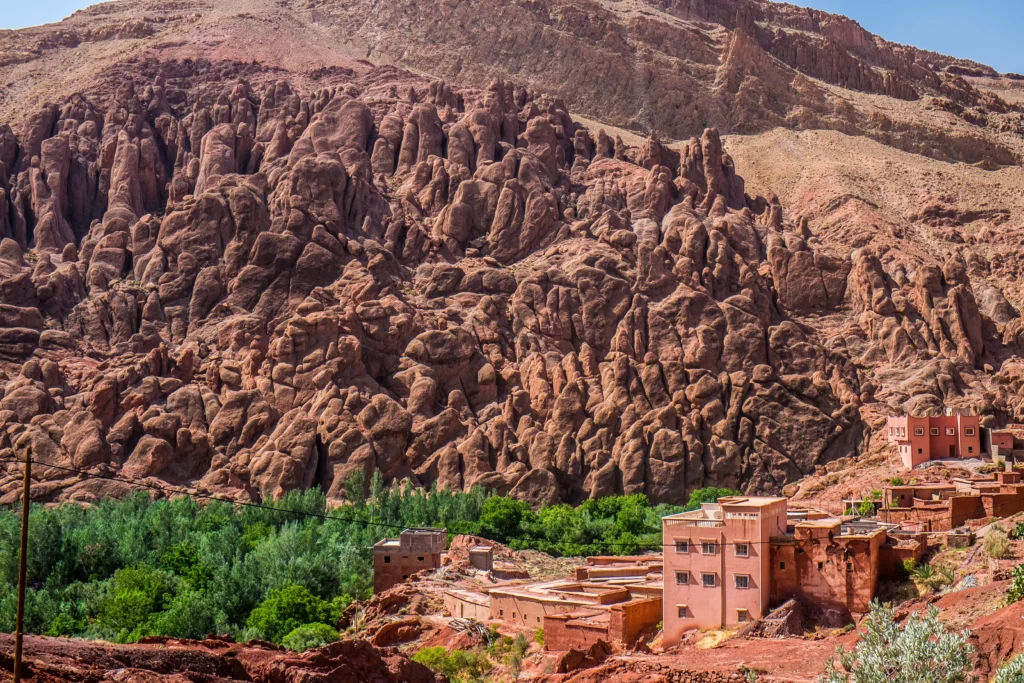
On a tour from Marrakech to the Sahara, you spend most of your time in Amazigh country. The villages of the High Atlas, the kasbahs of the Dades Valley, the palm groves of the Draa and the tents near the dunes of Merzouga are all home to Amazigh communities, the people often called “Berbers” in English. This guide is a short introduction for travellers: who they are, how life works in the southeast, and how to visit with respect.
Amazigh or Berber?
“Berber” is the word most travellers know, but it comes from outside: from the Greek and Latin words for foreigners who did not speak their language. Many people prefer Amazigh (plural Imazighen), their own name, usually translated as “free people”. You will hear both in Morocco, and nobody will be offended if you say Berber, but using Amazigh is a small sign of respect that people notice.
The Amazigh are the oldest known inhabitants of North Africa, present long before the Arab arrival in the 7th century. Today a large part of Morocco’s population is Amazigh or of Amazigh descent, and the culture runs through the whole country: in the food, the music, the architecture, the carpets and the place names.
The language: Tamazight and the Tifinagh alphabet
The Amazigh language, Tamazight, became an official language of Morocco alongside Arabic in the 2011 constitution. It has several regional varieties: Tarifit in the north, Central Atlas Tamazight in the Middle Atlas and much of the southeast, and Tashelhit (Shilha) in the High Atlas, the Souss and the Anti-Atlas.
You will see its alphabet, Tifinagh, on road signs, schools and town halls all over the south. The symbol in the middle of the Amazigh flag, ⵣ (the letter “yaz”), represents the free person, and you will see it painted on walls, jewelry and car windows.
A few words to try on your trip:
- Azul: hello
- Tanmirt: thank you
- Ayyur: moon (also a boy’s name)
Pronunciation and words change from valley to valley, so ask your guide how they say it at home.
The tribes of the southeast
The southeast of Morocco, between the High Atlas and the Sahara, has always been tribal country. The best known group is the Ait Atta, a large confederation whose heartland is the Jbel Saghro mountains. Over the centuries the Ait Atta spread into the Draa Valley, the Tafilalt oasis and the desert around Merzouga, living as semi-nomadic herders and farmers. They were among the last to resist the French: their stand at the battle of Bougafer, in the Saghro, ended only in 1933.
Around Merzouga you will meet families from the Ait Khabbash, an Ait Atta group who were great camel herders and caravan people of the desert. Other well-known groups of the region include the Ait Merghad, around Goulmima and the Todra, and the Ait Sedrate of the Dades Valley. You don’t need to remember the names, but asking someone where their family comes from is a good way to start a conversation.
Ksour, kasbahs and life in the oases
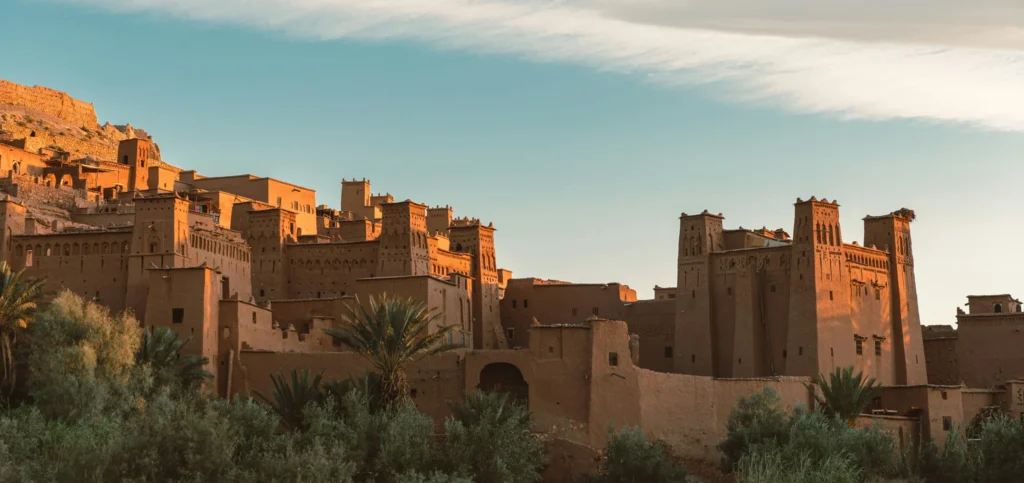
The southeast is the land of earth architecture. A ksar (plural ksour, ighrem in Tamazight) is a fortified village of rammed-earth houses packed together behind one wall, built to protect a whole community and its grain. A kasbah is a fortified house, usually belonging to one powerful family. Ait Benhaddou, a UNESCO World Heritage site on the road from Marrakech to Ouarzazate, is the most famous ksar in Morocco, and the “Road of a Thousand Kasbahs” through Skoura and the Dades Valley is lined with them.
Life in these valleys follows water. Families farm small plots under the date palms: barley, alfalfa, vegetables, olives, almonds and, around Kelaat M’Gouna, the famous roses. Water is shared between families through old channels and strict turns, a system managed by the community for generations.
The nomads of the desert
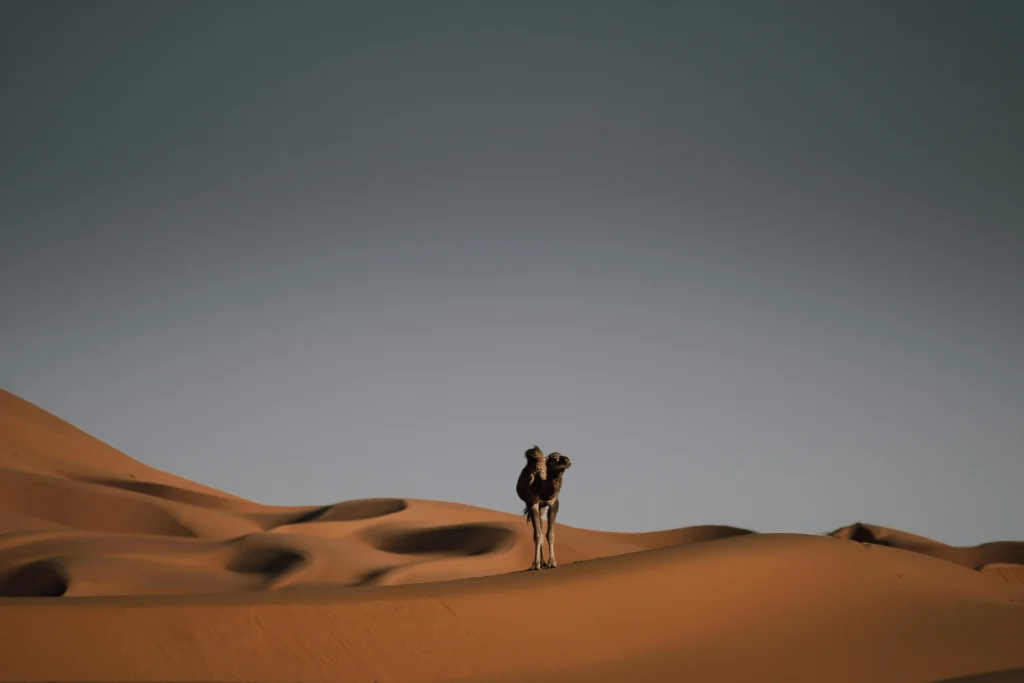
A few Amazigh families still live as nomads or semi-nomads around the Sahara and the Saghro, moving with their goats, sheep and camels between winter and summer pastures and living in tents woven from goat and camel hair. Their numbers are getting smaller every year as droughts get longer and children go to school in town.
On several of our desert tours, such as the 5-day Sahara Odyssey and the 7-day Sahara tour from Marrakech to Fes, there is time to drink tea with a nomad family near Merzouga. It is not a show: it is a visit to someone’s home, so it is short, simple and on their terms.
Food, music and celebrations
- Medfouna: often called “Berber pizza”, a flatbread stuffed with meat, onions, eggs and spices and baked in the sand or in a clay oven. Try it in Rissani or Merzouga.
- Tagine and couscous, slow-cooked on charcoal, and bread baked every morning.
- Ahidous: a group dance and song with lines of men and women, frame drums and clapping, performed at weddings and festivals in the Atlas and the southeast.
- Yennayer: the Amazigh New Year, celebrated in January. Since 2024 it has been an official public holiday in Morocco.
The village of Khamlia, near Merzouga, is home to a Gnawa community whose music has roots in West Africa. It is a good reminder that the southeast has always been a crossroads of the caravan routes.
Visiting with respect
- Ask before you take a photo of someone, especially women and older people. Many will say no, and that is fine.
- Dress modestly in villages: shoulders and knees covered is a good rule.
- Accept the tea. Hospitality is a point of pride, and refusing a glass can feel cold. One or two glasses is enough if you are in a hurry.
- Buy directly from the women’s cooperatives for carpets, argan oil and crafts when you can.
- Don’t give sweets or money to children. If you want to help, ask your guide about the local school or association.
Our team is based in Marrakech and travels these valleys every week, and sharing them with visitors is the best part of the job. If you would like a trip with more time in Amazigh villages, a night in a family guesthouse or a visit to a cooperative, tell us and we will build it into your private tour.
You may also like: Amazigh (Berber) tattoos in Morocco: symbols and meanings.
