
“When is the best time to go to the Sahara?” is the question we get most often on WhatsApp, usually from travellers in the US, the UK or northern Europe who are planning months ahead. The short answer: spring (March to May) and autumn (late September to November). The longer answer depends on what you can handle, heat or cold, and on what else you want to see in Morocco. Here is how each season really feels in the dunes of Erg Chebbi, near Merzouga, where most of our desert tours spend the night.
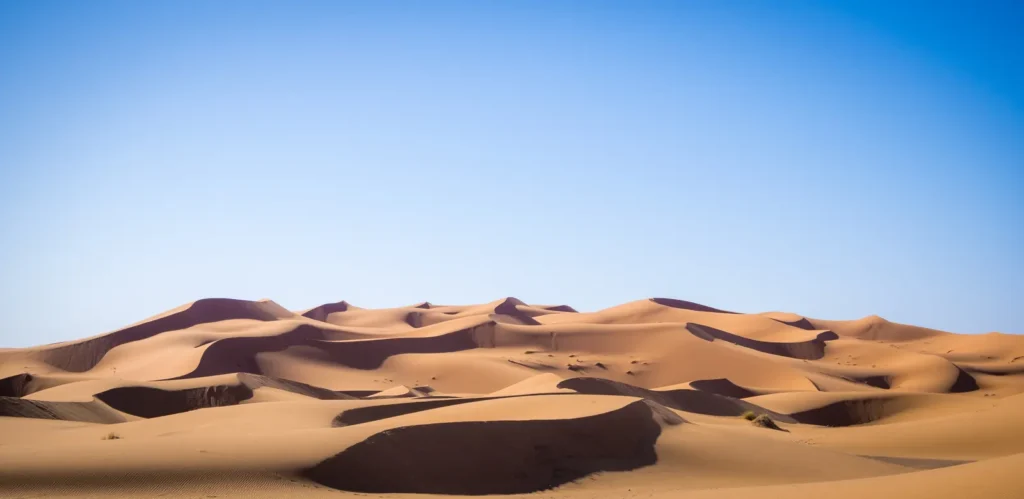
Sahara temperatures month by month
These are average figures for Merzouga. In the desert the difference between day and night is big, so look at both columns.
| Month | Average daytime high | What it feels like at camp |
|---|---|---|
| December – January | about 19–20°C (66–68°F) | Sunny days, cold nights close to freezing |
| February | about 21°C (70°F) | Mild days, still cold after sunset |
| March – April | about 26–30°C (79–86°F) | Warm days, pleasant evenings: our favourite time |
| May | about 34°C (93°F) | Hot middle of the day, perfect nights |
| June – August | about 39–43°C (102–109°F) | Very hot by day, warm nights |
| September | about 37°C (99°F) | Still hot, cooling at night |
| October – November | about 24–30°C (75–86°F) | Golden light, comfortable days and nights |
Spring (March to May): the easy choice
Spring is when the desert is kindest. Days are warm enough for a T-shirt, the camel ride at sunset is comfortable, and you only need a light jacket around the fire. On the way south the High Atlas can still have snow on the peaks, and in late April and early May the Valley of Roses around Kelaat M’Gouna smells of the rose harvest.
The only downside is that everybody knows it: Easter and the May holidays are busy, and the best desert camps fill up early. If you are travelling at Easter, write to us early so we can hold your camp and riads.
Autumn (late September to November): golden light and fewer crowds
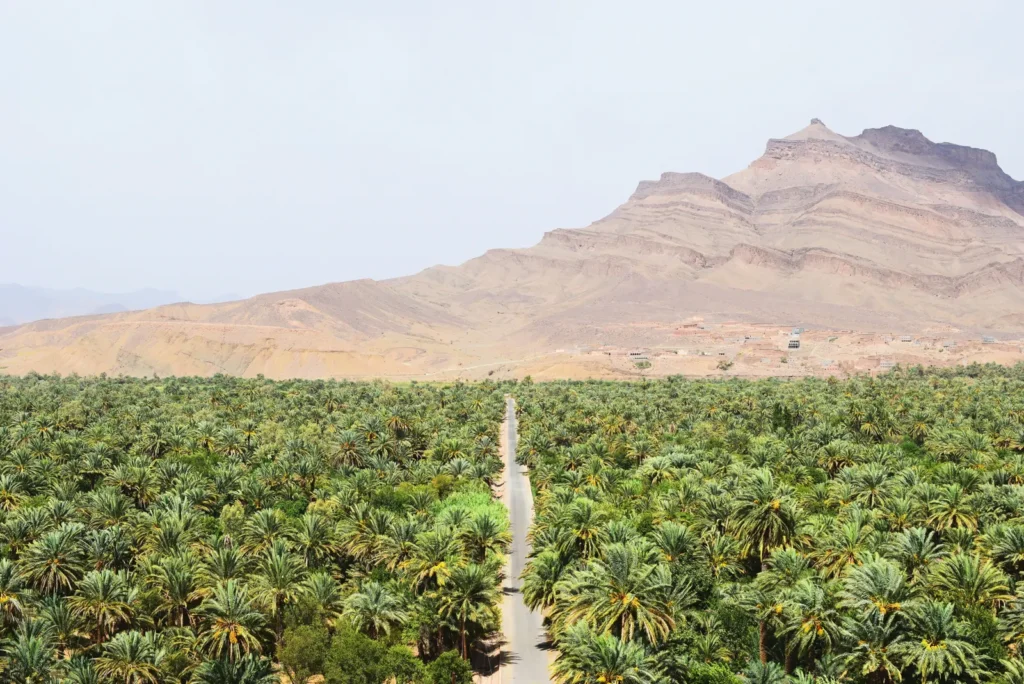
Autumn is just as good as spring. The summer heat breaks during September, the light on the dunes turns deep orange, and the date harvest is on in the oases of the Draa and Ziz valleys. October is a very good month for a 3 or 4-day trip from Marrakech.
Winter (December to February): cold nights, clear skies
Many travellers are surprised how cold the Sahara gets. In December and January the days are sunny and pleasant, but at night the temperature in the dunes can drop close to 0°C (32°F). The camps give you heavy blankets, and the sky is at its clearest for stars.
The other thing to know in winter is the Tizi n’Tichka pass over the High Atlas, at about 2,260 metres. After a snowfall the road can close for some hours, so we keep a little flexibility in winter itineraries. Pack a warm jacket, a hat and warm socks, and winter is a beautiful, quiet time to go, including over Christmas and New Year.
Summer (June to August): possible, but plan around the heat
In July and August the middle of the day in Merzouga is above 40°C (104°F). You can still go, and for families tied to school holidays it is often the only option, but we plan the day differently: early starts, long lunch breaks in the shade, the camel ride only late in the afternoon when the sand cools down. Nights at camp are warm and many people sleep outside on the mattresses under the stars. If you only have summer, it works, just drink a lot of water and keep the program light.
A note on wind and sandstorms
Strong winds can happen at any time of year, but they are more common in spring. A windy afternoon usually means hazy views rather than danger, and it normally calms down by the evening. Bring a scarf (or buy a cheche turban in Merzouga, your guide can show you how to tie it) and sunglasses.
So, when should you go?
- Best overall: March to May and late September to November.
- Best for stars and quiet: December to February, with warm clothes.
- Best for families on school holidays: summer works with an early-morning plan.
- Avoid if you can: the middle of July and August if you don’t like heat.
How many days do you need?
Merzouga is a long way from Marrakech, about 560 km, so we always recommend at least 3 days. The classic options are our 3-day Sahara tour from Marrakech to Fes and our 4-day desert round trip from Marrakech, which comes back through the Draa Valley and the Telouet Kasbah. If you have more time, the 5-day Sahara Odyssey slows everything down.
All our tours are private, with your own driver-guide, and we adjust the dates and the hotels to you. Send us your travel dates and we will tell you honestly what to expect for the weather that week.
Recent Comments