
Thirty minutes before the dunes of Merzouga, most travellers drive straight through Rissani without stopping. That is a pity. Just outside this dusty market town lie the ruins of Sijilmassa, for more than six centuries one of the richest caravan cities in Africa, the place where gold from beyond the Sahara entered the Islamic world. Some people call it the “Mecca of the Maghreb”; others say that is an exaggeration. Here is the story, and the different ways people tell it.
A city at the edge of the desert
Sijilmassa was founded in 757 in the Tafilalt oasis, on the Ziz river, by a community of Kharijite Berbers who had broken away from the caliphs in the east. Under the Midrarid dynasty it became an independent city-state with walls, palaces, mosques and a huge belt of palm groves and gardens around it.
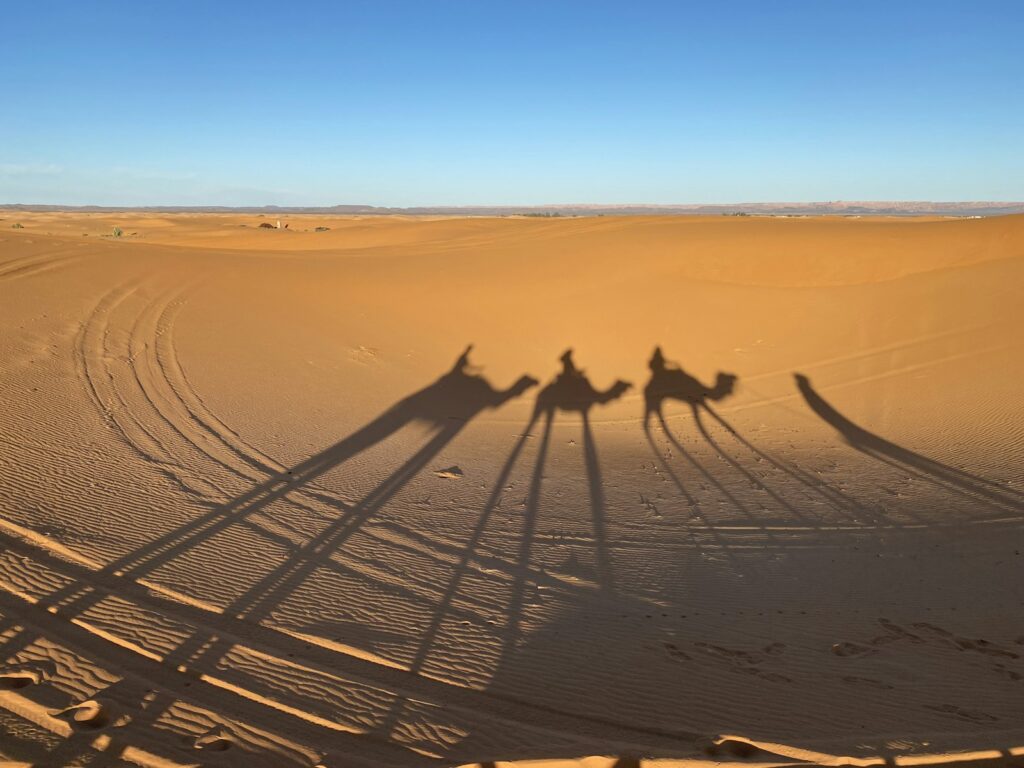
Its wealth came from one thing: position. Sijilmassa was the northern end of the western trans-Saharan route. Caravans of hundreds or even thousands of camels left here for the south, crossing the desert for around two months to reach the markets of the Sahel, and came back loaded with gold, ivory and, it must be said, enslaved people. Salt, textiles, copper, books and horses went the other way. Gold arriving from the south was struck into dinars at the city’s mint, and Sijilmassa coins circulated across the Mediterranean world.
Dynasties, scholars and travellers
Whoever held Sijilmassa held the purse of the desert trade, so every great Moroccan dynasty wanted it. In 1055 it became the first major city taken by the Almoravids, the movement born among the desert Berbers that went on to rule from Senegal to Spain, and in their early decades it was the main mint of their gold coinage. The Almohads took it in 1146, then the Marinids.
The most famous visitor was Ibn Battuta. In 1352 the great traveller from Tangier stopped at Sijilmassa, bought camels and fodder, and set off from here across the Sahara to the empire of Mali. His account is one of the best descriptions we have of how a caravan actually crossed the desert.
Trade, faith and pilgrimage: two ways of telling it
The first view is the one you will hear in Rissani. Sijilmassa was more than a market: it was a gateway of faith. Merchants and scholars travelling with the caravans carried Islam, Arabic writing and Maliki law south into West Africa, and pilgrims from the Sahel passed through on their way to Mecca. For many people in the Tafilalt this is why Sijilmassa deserves to be called the “Mecca of the Maghreb”, and why its souk is spoken of as the oldest market in Africa.
The second view is the one many historians prefer. Islam reached West Africa through many routes and many towns, not one, and older markets existed elsewhere in Africa long before 757. Sijilmassa’s importance, they argue, was mainly economic: it was a trading and minting city, and its religious role was one part of a wider story that also ran through Kairouan, Fez, Tlemcen and the Saharan oases.
Both views agree on the essentials: for centuries this oasis was a meeting point between North Africa and the lands south of the Sahara, and ideas travelled along the same roads as gold. You can decide for yourself which way of telling it feels closer to the truth when you stand among the ruins.
Why the city disappeared
From the 14th century the trade routes shifted east and west, civil wars weakened the Tafilalt, and Sijilmassa was largely abandoned around the end of the 14th century. The oasis broke up into dozens of fortified villages (ksour). Sultan Moulay Ismail rebuilt part of the city in the 17th century, but it was destroyed again in 1818. Today the ruins are low earthen walls and mounds stretching along the Ziz just outside Rissani. American and Moroccan archaeologists excavated here from 1988, and the site has been listed by the World Monuments Fund as endangered.
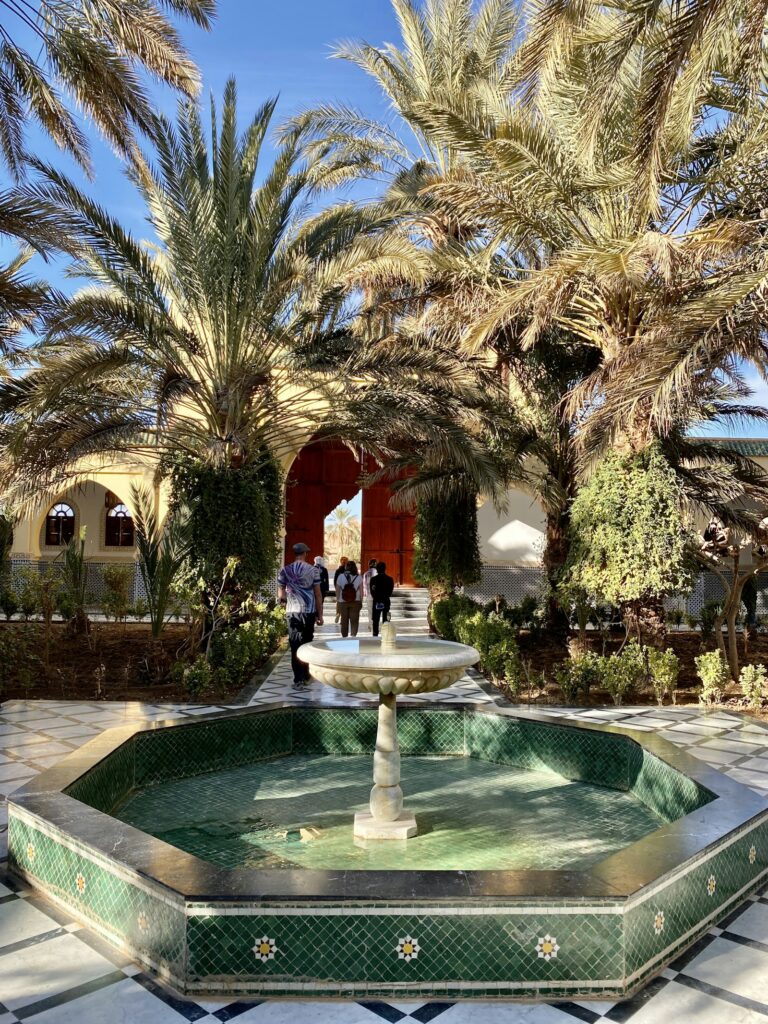
The story did not end with the ruins. The Alaouite dynasty, which still rules Morocco today, comes from the Tafilalt. In Rissani you can visit the mausoleum of Moulay Ali Cherif, the dynasty’s ancestor, and the restored Ksar Oulad Abdelhalim, a palace-ksar built around 1900.
Khettaras: water under the desert
None of this would have been possible without water. Around Rissani and Erfoud you will see lines of earth mounds running across the plain like giant molehills. Each mound is the top of a shaft leading down to a khettara, a gently sloping underground channel that carries groundwater by gravity from the foot of the hills to the palm groves, sometimes for several kilometres, without evaporating in the heat.
Khettaras have watered the Tafilalt since at least the late 14th century. They were dug and maintained by hand, and each family’s share of water was measured in time. Many have now dried up, as falling water tables, wells, motor pumps and dams changed the oasis, but some are still in use and a few have been restored. Some local guides can show you one from the inside.
Visiting Rissani today
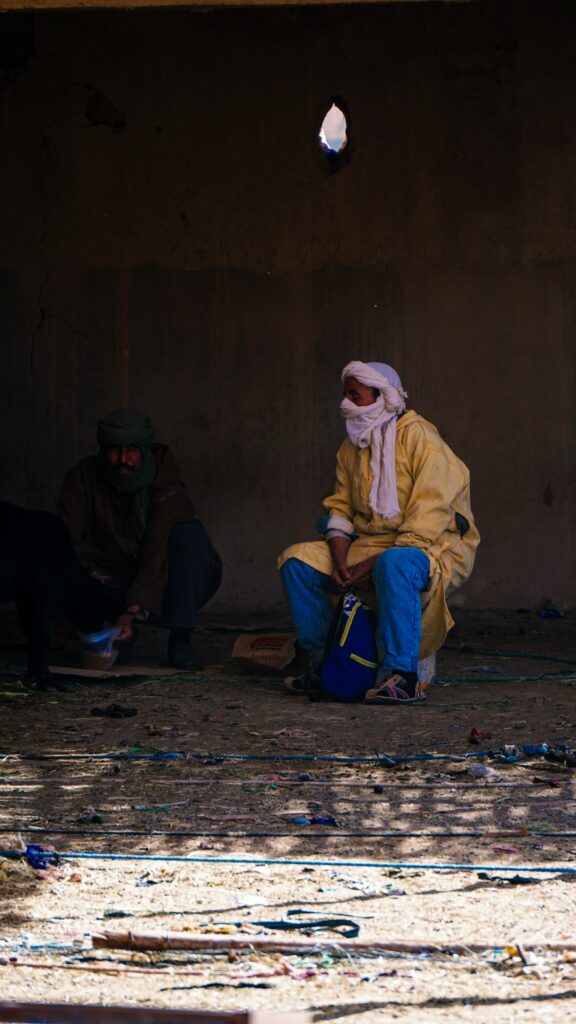
- The souk is held on Tuesday, Thursday and Sunday. Look for the “donkey parking”, the spice and date sellers, and the livestock market.
- Sijilmassa’s ruins are just outside town. There is little signage, so a local guide makes a big difference.
- Combine it with the Moulay Ali Cherif mausoleum, Ksar Oulad Abdelhalim, a khettara and, on the way to the dunes, the fossil workshops of Erfoud.
Rissani sits on the road to Merzouga and the Erg Chebbi dunes, so it fits into any of our desert tours. Tell us your dates and we will try to time your trip with a market day:
- 3-Day Sahara Tour: Marrakech to Fes via Merzouga
- 3-Day Fes to Merzouga Round Trip
- 6-Day Two Deserts Tour: Erg Chigaga and Merzouga
Still choosing a desert? Read Erg Chigaga or Merzouga: which Sahara desert should you choose?
Written by Hda Abdou, founder of Morocco Cultours.
